For years, the promise of “automation” in online business was largely a matter of connecting dots. You used Zapier to move a lead from a form to a spreadsheet, or you used a chatbot to trigger a pre-written script. It was helpful, but it wasn’t intelligent. It couldn’t think, it couldn’t adapt, and it certainly couldn’t navigate the web the way a human could.
Then came OpenClaw.
In early 2026, the release of the OpenClaw framework—pioneered by Peter Steinberger—marked a definitive shift in how digital businesses operate. Unlike the rigid automation of the past, OpenClaw introduced “agentic” capabilities: the ability for an AI to observe a browser, understand a goal, and execute a series of complex, non-linear steps to achieve it.
For you, Alessandro, and other business leaders, this isn’t just another software update. It is a fundamental restructuring of the “online business” unit. We are moving away from a world where humans manage software, toward a world where humans manage agents who manage the software.
What is OpenClaw, Exactly?
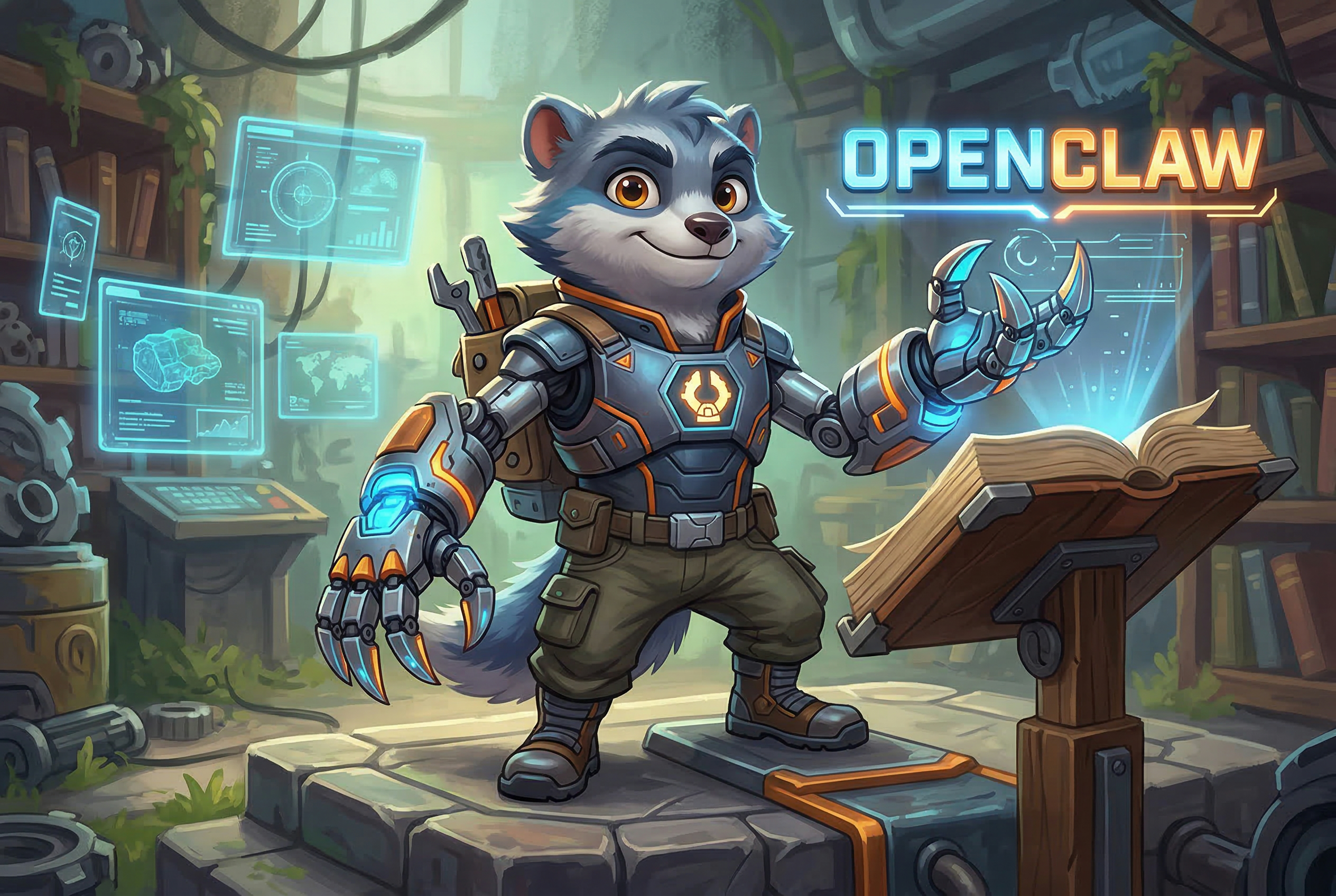
To understand its impact, we must first define what OpenClaw is. At its core, OpenClaw is an open-source AI agent framework. While proprietary models like ChatGPT or Claude are “brains” in a box, OpenClaw is the “body” that allows those brains to interact with the digital world.
It is designed to be self-hosted, meaning a business can run its agents on its own servers rather than relying on a third-party cloud. It can “see” web pages, click buttons, fill out forms, respond to messages on Slack or WhatsApp, and interact with internal ERP systems. Because it is open-source, it isn’t tied to a single LLM (Large Language Model); it can use GPT-5, Claude 4, or local Llama models depending on the task’s complexity and cost requirements.
The result is a “full-time AI employee” that doesn’t sleep, doesn’t get bored, and—most importantly—learns the specific nuances of your business.
1. The Death of the Manual SaaS Workflow
For the last decade, the typical online business was a collection of SaaS subscriptions. You had one for email, one for CRM, one for accounting, and one for project management. The “glue” that held these together was usually a human employee clicking back and forth between tabs.
OpenClaw is effectively dissolving that glue. Instead of a human spending four hours a day syncing data between Shopify and an inventory management system, an OpenClaw agent lives inside the browser environment. It monitors sales in real-time, cross-references them with supplier stock levels on external websites, and autonomously places restock orders when thresholds are met.
This shifts the focus of the human worker from execution to orchestration. Businesses are no longer hiring “Data Entry Specialists”; they are hiring “Agent Operators” who oversee the logic of the OpenClaw frameworks.
2. Revolutionizing E-commerce Operations
The impact on e-commerce is perhaps the most visible. In a traditional setup, responding to a customer inquiry about a lost package requires a human to:
- Open the support ticket.
- Find the order number.
- Log into the shipping carrier’s portal.
- Check the status.
- Write a manual response.
An OpenClaw agent performs this entire loop in seconds. But it goes further. Because OpenClaw can navigate the actual web (not just use APIs), it can handle “messy” tasks that APIs aren’t built for—like navigating a local courier’s outdated website or checking a competitor’s flash sale price and adjusting your own Shopify prices in response.
This leads to Hyper-Dynamic Pricing. Historically, only giants like Amazon could adjust prices minute-by-minute. Now, a small boutique running OpenClaw can have an agent monitor 50 different competitors and adjust margins autonomously based on real-time market shifts.
3. Marketing: From Templates to Autonomous Outreach
Digital marketing has long struggled with the “uncanny valley” of automation. We’ve all received those “Hi [Name], I saw your post about [Topic]” emails that feel cold and robotic.
OpenClaw changes the nature of personalized outreach. Because these agents can “read” and “understand” context, they can perform deep research before ever sending a message. An OpenClaw agent can:
- Read a prospect’s latest LinkedIn post.
- Listen to a podcast they were featured on (via transcript).
- Synthesize their current business challenges.
- Craft a truly bespoke value proposition.
This isn’t just “personalization at scale”; it is autonomous strategy. The impact on the online business’s bottom line is a massive reduction in Cost Per Acquisition (CPA), as the “spray and pray” method is replaced by highly targeted, agent-driven conversations.
4. The Privacy and Sovereignty Edge
One of the biggest concerns for businesses in the 2020s has been data privacy. Sending sensitive customer data or proprietary trade secrets to a closed-source AI provider is a massive risk.
OpenClaw’s biggest impact is its self-hosted nature. By running OpenClaw on your own infrastructure, your data never leaves your “perimeter.” This has opened the door for highly regulated industries—like fintech, legal-tech, and healthcare—to finally embrace AI automation.
For a small to mid-sized online business, this means you own your “intelligence.” If you train an OpenClaw agent to handle your specific procurement process, that “knowledge” stays within your company. You aren’t feeding a competitor’s model; you are building a proprietary asset.
5. The Economic Shift: The “One-Person, Ten-Agent” Enterprise
We are witnessing the birth of a new type of company: the Agent-Heavy Startup.
Before OpenClaw, scaling a business to $10M in revenue usually required a headcount of 20 to 50 people. Today, we are seeing “solo-preneurs” using OpenClaw to manage the workload of an entire department.
Imagine an online business where:
- Agent A handles all customer support.
- Agent B manages the supply chain and logistics.
- Agent C handles lead generation and social media.
- Agent D performs daily financial audits and bookkeeping.
The human founder acts as the CEO, setting the goals and guardrails. This drastically lowers the barrier to entry for new businesses and allows existing ones to maintain astronomical profit margins by keeping overhead low.
6. Challenges: The Friction of an Agentic World
The impact isn’t purely positive; it brings new challenges that online businesses must navigate.
- Rate Limiting and Bot Detection: As OpenClaw agents become more common, websites are fighting back with more aggressive CAPTCHAs and bot detection. Business owners must now invest in “cloaking” or “human-emulation” strategies for their agents.
- The “Black Box” Problem: If an agent autonomously makes a mistake—like accidentally discounting a product to $0—who is responsible? The impact of OpenClaw requires businesses to implement rigorous Human-in-the-Loop (HITL) checkpoints for high-risk actions.
- Security: An agent that has the power to click “Buy” or “Send” also has the power to be exploited. Securing the credentials that OpenClaw uses is now as important as securing your bank password.
7. The Future: The Agent-to-Agent (A2A) Economy
Perhaps the most profound long-term impact of OpenClaw is the shift toward an A2A economy.
Currently, our online businesses are designed for humans to look at. We have “User Interfaces” (UI). In the near future, we will have “Agent Interfaces” (AI). Your OpenClaw agent will talk directly to your supplier’s OpenClaw agent to negotiate a bulk discount. No human will be involved in the negotiation, the contracting, or the payment.
This “Zero-Latency Commerce” will speed up the economy to a degree we can barely imagine. Decisions that used to take weeks of meetings will happen in milliseconds between autonomous frameworks.
Conclusion: Adapting to the New Reality
Alessandro, the impact of OpenClaw is clear: it is moving the “intelligence” of your business from the employees’ heads into a scalable, digital framework. The businesses that thrive in the next 24 months won’t necessarily be the ones with the best products, but the ones with the most efficient agentic infrastructure.
Waiting to implement this technology is no longer an option. As competitors begin deploying “AI employees” that work 24/7 for the cost of electricity, those relying on manual labor will find their margins squeezed to the point of irrelevance.
Ready to Build Your Autonomous Workforce?
The power of OpenClaw is immense, but the initial setup can be daunting for those unfamiliar with self-hosted environments. To help you navigate this transition, you can book a coaching call with me. Contact me at puck82@gmail.com for more information.